The Choice Every Leader Faces When It's Not Their Turn
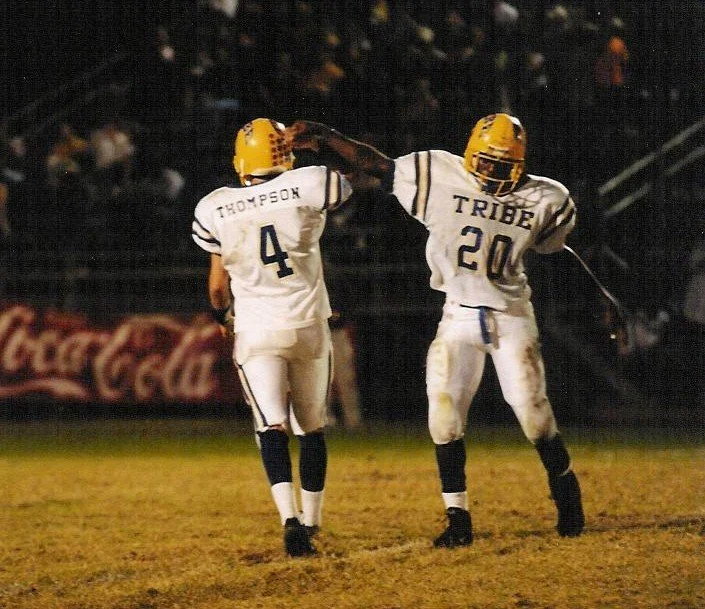
I stood on the sideline during the first playoff game my senior year of high school, watching my backup quarterback light up the scoreboard.
He was having a good game. A really good.
On the outside, I was high-fiving teammates, but inside, I was doing mental math - calculating whether this concussion that kept me out for the week had just cost me my starting job and my final high school games. My team was winning, and all I could think about was myself.
I wasn't a great teammate that night. I was an even worse leader.
The truth I didn't want to admit? His success felt like a threat to my ego. If he could run the offense this well without me, what did that say about my value?
You learn a lot about yourself when you're on the bench.
More importantly, the people around you learn even more about who you really are when things aren't going your way.
When It's Not Your Season
We all experience seasons of success and seasons of struggle. Sales quarters where everything you touch turns to gold, followed by months where you can't seem to close anything. Teammates hitting their numbers while you're stuck. Friends getting promoted while you're spinning your wheels.
A real test of leadership character isn't how you show up when you're winning.
It's who you become for others when it's their season and not yours.
Paul Hiepler understood this better than I did.
Paul was a senior at Abilene Christian when his team made the 2021 NCAA tournament. He'd played in twenty of their twenty-four games that season, averaging less than one point per game off the bench. When ACU pulled off a first-round upset over third-seed Texas, Paul didn't score the game-winning bucket. He didn't dive out of bounds for a steal.
He didn't even play.
But he went viral anyway.
Cameras caught him after every timeout - jumping, screaming, high-fiving his teammates with relentless energy. Even the announcers were commenting on this kid who knew he probably wouldn't see the court in what could be his final college game ever, yet refused to let that change his energy.
When asked about it later, Paul said:
"Because I'm the energy guy on the bench, people assume I don't want to play. If I could play forty minutes a game, I would, but that's not something in my control.
My dad told me this and my dad's friend told me right before I came to college: control everything you can control and don't worry about everything you can't.
I pride myself on being the hardest worker in the gym and on the court. I control what I can—and I don't control when the coach puts me in the game, so I give everything I can in my role, even if it's on the bench."
Control the controllables. Choose to be a great teammate even when it's not your moment.
That's the lesson I missed on my sideline.
The Choices You Make on the Bench
When you're not in your season -when the sales aren't closing, when your peer just got the promotion you wanted, when everyone else seems to be winning - you face a choice:
Do you cheer loudly for the people on the court, or sulk with a towel over your head?
Are you engaged in the team huddle, or sitting by yourself on the bench?
Do you care about the team winning, or only about whether you're playing?
I failed that test in high school because I let my ego lead instead of my heart.
Choosing ego first means you care about how you look and how you win. You want your friends and teammates to do well - you do - but just not as well as you do. You want to be better. The ego hates everyone else's joy when you're in a "not yet" season. The ego robs you of your ability to lead effectively.
Choosing heart over ego means you genuinely care about the other person's success. You see their win as something to celebrate and as inspiration to raise your own game. Heart celebrates others' joy during your own "not yet" season because you know soon enough, it'll be your time in the spotlight.
What This Actually Looks Like
Had a dip in sales this month? Celebrate your teammate who hit their mark - and then ask them what they did differently or successfully this month to learn from them.
Failing to hit your personal best while your workout partner crushes three PRs in the gym last week? Celebrate them - and then put your focus into your training, nutrition, and rest.
Watching a colleague land the client you've been chasing for months? Send them a message congratulating them - and then review your pitch to see what you can improve.
Leaders understand that their friends' success doesn't diminish their own.
Your coworker closing a deal doesn't make you less valuable. Your friend getting promoted doesn't mean you won't. They're chasing different goals and tackling different obstacles - how does celebrating their success hurt you?
It doesn't.
But your ego will try to convince you otherwise. It'll whisper that you're falling behind, that you should have been the one, that their spotlight dims yours.
That's when you have to choose: ego or heart.
Don't Let Your Position Influence Your Effort
We fail to be effective leaders if we only inspire, encourage, or challenge those around us when we're doing well.
We have to influence them just as strongly when things aren't going well for us.
That's what separates Competitors from spectators.
Competitors understand that leadership isn't conditional on personal success.
It's not something you turn on when you're crushing your goals and turn off when you're struggling. It's a choice you make every single day, regardless of whether you're on the court scoring or on the bench cheering.
Don't let your current position - on the court or the bench - influence how much effort you give to lead.
Be like Paul: control what you can and choose to be a great teammate no matter if you're on the court scoring during your time or on the bench cheering during theirs.
The Question You Have to Ask Yourself
Who are you becoming when it's not your season?
Because people are watching. Your team is watching. Your colleagues are watching. Your friends are watching.
And they're learning more about who you really are during your struggle than they ever did during your success.
Fast forward from my sideline sulk in high school to now. I've spent years watching this play out - in keynote audiences, in our leadership cohorts, in coaching conversations. The pattern is clear:
The people who rise the fastest are rarely the most talented. They're the ones who chose to be great teammates when they were on the bench. They're the ones who celebrated others' wins during their own "not yet" seasons. They're the ones who kept showing up with energy and effort when they had every reason to check out.
Those are the leaders people want to follow.
So ask yourself: What's one area where you've been letting your ego lead instead of your heart?
Where have you been sulking on the bench instead of cheering from it?
Because your next season is coming. And when it does, you'll want people in your corner who learned how to celebrate others during their own struggles.
Be that person now. Choose heart over ego. Control the controllables.
That's how you Compete Every Day- even when it's not your season.
Jake Thompson is a keynote speaker on competitive mindset who works with sales-led organizations, construction teams, and associations to fight drift and build high-performance cultures that compete every day through the C.O.M.P.E.T.E. Framework®, inspiring keynote programs, and practical systems that turn inconsistent results into sustained excellence.