Why Motivation Fails Sales Teams (And What Actually Works Long-Term)
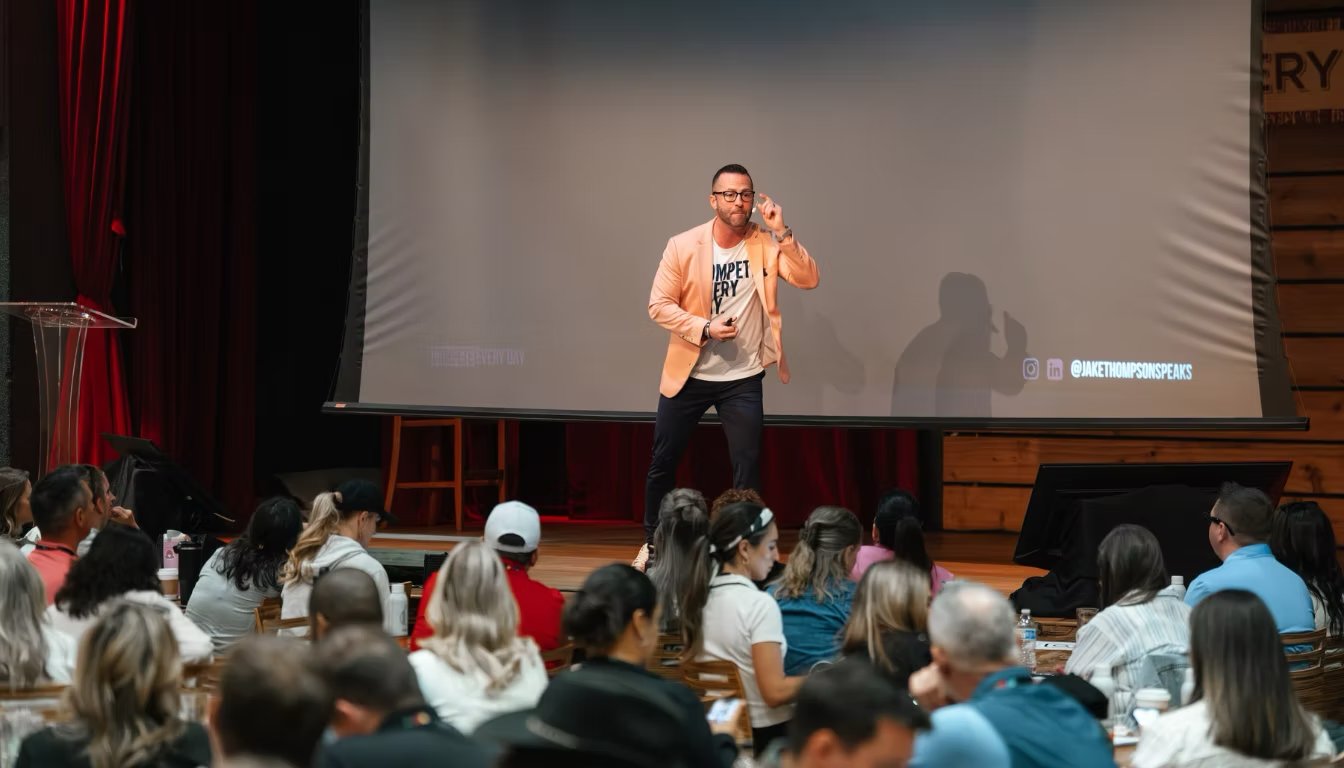
Every January, organizations invest heavily in motivation. Sales kickoffs with high-energy speakers. Recognition trips. Contest prizes. New commission accelerators. The intent is right — you want to start the year with momentum, with urgency, with a team that's locked in and ready to compete.
And then February happens.
Not because the team is bad. Not because the message wasn't right. But because motivation was never built to last. It's rocket fuel - powerful at ignition, gone by the time you're trying to sustain altitude.
If you want a sales team that competes consistently — not just the week after the annual kickoff — you need something motivation can't provide: a system.
The Fundamental Problem With Motivation-Based Sales Cultures
Motivation is emotional. It rises and falls based on circumstances, wins and losses, personal life, energy levels, and what happened at the last team meeting. On a good day, it's a multiplier. On a hard day, it's absent without notice.
When your sales culture is built primarily on motivation — on generating urgency through contests and leaderboards, and relying on external pressure to produce elite behavior — you've built a performance system that only works under specific conditions. And those conditions are never permanent.
Here's one thing that I see consistently across the sales organizations I work with: the gap between a great Q1 and a mediocre Q3 almost always traces back to the same root cause. In Q1, there's external energy — a fresh start, leadership attention, a new initiative, the annual kickoff buzz.
In Q3, those energy sources are gone. And if the team hasn't built internal competitive systems to replace the external ones, performance drifts.
Drift isn't dramatic.
That's what makes it dangerous. It's 5% less prospecting activity. It's calls that go slightly shorter. It's pipeline reviews that feel a little less urgent. Each individual drop is explainable — life happened, a deal fell through, it was a tough week.
But when you aggregate the drift across your team over six months, the revenue impact is significant.
What Elite Sales Performers Actually Run On
The best sales professionals I've encountered — and I've spoken to rooms full of them across pharmaceutical sales, financial services, insurance, and real estate — don't wake up every day feeling motivated. They don't need to. They've built something more durable.
They've built standards.
A standard isn't a goal.
A goal is an outcome you're chasing. A standard is a behavior you've committed to regardless of how you feel, regardless of what the leaderboard says, regardless of whether anyone is watching.
Elite performers execute their standards on bad days, on slow weeks, in soft quarters — because their performance isn't dependent on external conditions.
This is the core of what I teach through the Beat Yesterday® methodology: shifting sales cultures from motivation-dependent to standard-driven. The question isn't 'how do we get the team excited about Q3?' The question is 'what standards has each person committed to, and are they executing them regardless of their emotional state?'
The difference in practice: A motivation-driven rep makes prospecting calls when they feel confident, when the last call went well, when they're in the right headspace. A standard-driven rep makes prospecting calls because that's the standard — and they've decided in advance that the standard doesn't negotiate with their mood.
The C.O.M.P.E.T.E. Framework®: A System for Sustained Performance
Building a standard-driven sales culture requires more than a well-delivered message — it requires a structured system. Which is why the C.O.M.P.E.T.E. Framework® is at the center of the training I deliver at sales kickoffs and leadership summits.
The framework is a seven-step system that replaces motivation dependency with daily competitive practices:
C — Clarify: Define the game you're actually playing and why winning it matters. Vague goals produce vague effort. Elite performers know exactly what they're competing for.
O — Observe: Know the inputs that move the needle — the controllable behaviors that directly produce outcomes. What gets measured gets improved. Measure the right things.
M — Model of Excellence: What does world-class look like in your specific role? Write down the behaviors, the quality of those behaviors, and what defines world-class so you have a target to incrementally move toward.
P — Position: Acknowledge the ego gap — the distance between who you think you are and who you actually are. You can't fix what you won't acknowledge.
E — Execute: Connect daily effort to long-term purpose. Discipline beats motivation. Every time. But purpose sustains discipline when discipline is hard.
T — Take Time: Insanity is doing the same thing over and over again and expecting a different result - but that's what many sales professionals do. They keep repeating the behaviors instead of having a proven 'gametape' process to evaluate and identify improvement areas after each call and each week.
E — Environment: Build a circle of people who raise your ceiling, not protect your comfort. Complacency spreads through culture. So does competitive hunger.
What This Looks Like for Your Team Right Now
The practical application isn't complicated, but it does require intentionality. Here are three shifts that move a sales culture from motivation-dependent to standard-driven:
Replace external contests with internal personal records. Instead of 'top rep wins the trip,' add a 'personal best' metric to your recognition structure. What's the best week this rep has ever had? Are they competing against that record? Competing against yourself never requires you to lap the field first — it's always available.
Build 'Beat Yesterday' accountability into your 1:1 cadence. One question, every week: 'What's one thing you did better this week than last week?' Small and specific. This rewires the competitive frame from external comparison to internal improvement — and surfaces the drift before it compounds.
Recognize execution of standards, not just results. What gets celebrated gets repeated. If your only recognition goes to top quota attainment, you're training people to manage outcomes, not behaviors. Find the reps executing their prospecting standard at 8am on a Friday in a tough month — and make that visible to the team.
The Long Game
Motivation-based cultures produce strong kickoffs and soft back halves. Standard-driven cultures produce consistent performance across the calendar — because the system doesn't depend on the emotional weather.
The organizations that sustain excellence over years aren't the ones with the biggest prize trips or the most creative contest mechanics. They're the ones that have embedded a competitive identity so deeply into the culture that people compete whether anyone is watching or not.
That's what anti-complacency training builds. Not a fired-up Tuesday in January. A team that competes every single day.
Jake Thompson is a keynote speaker on anti-complacency and sustained sales performance who helps sales-led organizations replace motivation dependency with the standard-driven systems elite teams actually run on. As a CSP® with 500+ keynotes delivered, Jake works with pharmaceutical sales, financial services, insurance, and real estate organizations to build cultures where performance doesn't depend on the external environment. Learn more at JakeAThompson.com.