The Culture That Killed Performance Before It Started
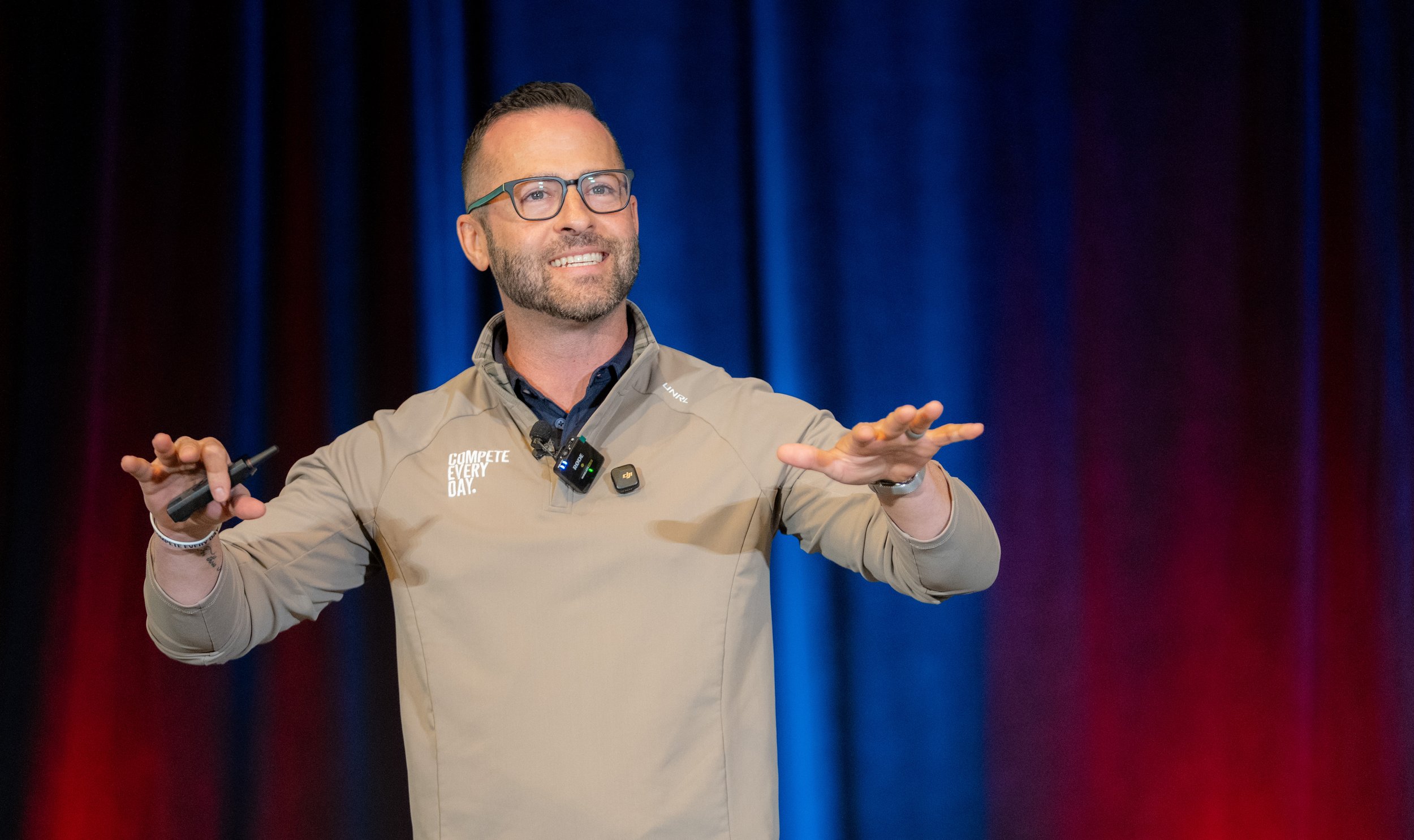
Former NFL quarterback Alex Smith said something on the Glue Guys podcast last year that stopped me in my tracks.
"Great leaders accept failure."
They don't want it. They don't seek it. But they understand it happens when people are growing and improving.
He went on to explain that the coaches who wouldn't accept mistakes - who demanded perfection every single play - created the worst environments. Everyone played uptight. On edge. Out of fear.
"You can't perform at your best if you're afraid of making a mistake," Smith said.
I thought about every coach I played for growing up. The ones who emphasized that physical mistakes happen - the ball could slip out of your hand, you might get manhandled on the line of scrimmage - but mental mistakes were always in your control.
They accepted that physical failures could happen. But don't get beat mentally.
That distinction mattered.
It created room to compete without the paralyzing fear of being benched for one bad play. Then I thought about the consulting client I worked for before starting Compete Every Day .
The one where I had a pit in my stomach every single day. I literally felt sick walking into that office.
Not because the work was hard. But because I felt like I could never do, say, or try the wrong thing.
Mistakes were unacceptable. Ever. In any form.
The CEO would publicly call out anyone who made an error. Team meetings became interrogations about who dropped the ball. People spent more energy covering their tracks than actually doing their jobs.
Everyone operated out of fear and defensiveness.
No one took risks. No one offered new ideas. No one spoke up when they saw a problem, because speaking up meant admitting something wasn't perfect, and admitting something wasn't perfect meant you'd become the target.
Harvard professor Amy Edmondson discovered this pattern while researching hospital teams. She expected the best-performing teams to report fewer mistakes.
Instead, she found the opposite: higher-performing teams reported more errors than their lower-performing counterparts.
Why?
Because psychologically safe teams felt comfortable admitting mistakes early, which meant they could fix them before they became disasters.
Edmondson added a question to her survey: "If you make a mistake in this unit, it won't be held against you."
The more people believed that making a mistake would not be held against them, the higher the detected errors in their unit. When people believe mistakes will be held against them, they are loath to report them.
The low-performing teams? They were making just as many mistakes. They just weren't reporting them.
They were hiding them. Covering them up. Hoping no one would notice.
Sound familiar?
The Anxiety Zone
Edmondson identified four zones teams operate in based on two dimensions: psychological safety and accountability. When psychological safety is low but accountability is high, you're in what she calls the "anxiety zone" - where people are reluctant to take risks or offer new ideas because they fear punishment.
That was the culture at that consulting firm. High accountability. Zero psychological safety.
People care about their job but stay quiet with concerns, often leading to preventable mistakes.
Research shows that fear is negatively and significantly related to job performance. When people are afraid, they perform worse. They help each other less. And they engage in more behaviors that hurt the organization.
Fear-based leadership leads to poor communication, low transparency, reduced innovation, and diminished performance, creating a culture of mistrust and anxiety.
But here's what kills me: Most leaders creating these environments don't even realize they're doing it.
A global study of 2,500 emerging leaders found that one third of leaders are unconsciously creating an environment of fear with direct reports.
They think they're holding people accountable. They think they're maintaining standards. They think they're driving excellence. But what they're actually doing is teaching their teams to hide problems, avoid risks, and protect themselves instead of pursuing greatness.
The ideal situation is where both psychological safety and accountability are high. Edmondson calls this the learning or high-performance zone, where people collaborate and learn from each other's mistakes. NeuroLeadership Institute
This is what my coaches created when they accepted physical mistakes but demanded mental discipline.
They weren't saying "anything goes." They weren't lowering the standard.
They were saying: "We expect you to prepare. We expect you to know your assignment. We expect you to give your best effort. But if you execute perfectly and the ball slips—that's part of competing. Learn from it. Fix it. Move on."
That's the distinction most leaders miss.
Psychological safety doesn't mean there are no standards. It doesn't mean everyone gets a participation trophy. It doesn't mean we celebrate mediocrity.
Psychological safety is the belief that you can speak up with ideas, questions, concerns, or mistakes without fear of repercussions. It doesn't mean freedom to not do your job correctly.
It means people can admit when they don't know something without being ridiculed.
It means they can report a problem without being blamed for it.
It means they can try something new without career-ending consequences if it doesn't work.
According to an article by Harvard Business School, psychological safety is "literally mission-critical in today's work environment. You no longer have the option of leading through fear or managing through fear. In an uncertain, interdependent world, it doesn't work—either as a motivator or as an enabler of high performance."
So how do we build it?
If you're leading a team right now, ask yourself: Are your people more focused on avoiding mistakes or achieving excellence?
Because those are two very different cultures.
Here's how to shift from the anxiety zone to the high-performance zone:
1. Model failure.
By admitting when you make a mistake or don't know the answer, you allow (indeed, encourage) others to do the same. I screwed this up in that consulting role. I tried to appear perfect because I thought that's what leadership required. But all I did was contribute to the culture of fear.
2. Distinguish between smart risks and reckless ones.
Not all failures are equal. Alex Smith's point wasn't that mistakes don't matter - it's that growing, improving people will make mistakes as they push themselves.
Your job as a leader is to create space for calculated risks while still holding people accountable for preparation and effort.
3. Focus on learning, not blame.
When something goes wrong, the first question shouldn't be "Who screwed up?" It should be "What did we learn, and how do we not make the same mistake again?"
Structure these review sessions to surface insights that improve future performance rather than rehashing past failures.
4. Respond to bad news with curiosity, not punishment.
Your response to input determines whether psychological safety grows or erodes. If someone brings you a problem and you shoot the messenger, congratulations, you just taught your entire team to hide problems from you.
5. Make it safe to not know.
Model curiosity and asking questions. "I don't know" are three of the most powerful words you can use.
Stay curious, ask other people what they think, and ask them to contribute. By asking questions and asking for help, you're creating a space and a need for people to speak up.
The best teams aren't the ones with all the answers. They're the ones comfortable saying "I don't know—let's figure it out together."
The teams that win aren't the ones who never make mistakes.
They're the ones who feel safe enough to admit them early, learn from them quickly, and move forward stronger.
I think about that client culture now - how much talent they lost because people couldn't wait to leave. How many problems festered because no one felt safe raising them. How many opportunities they missed because people were too afraid to try.
Then I think about Alex Smith's insight: You can't perform at your best if you're afraid of making a mistake.
So ask yourself: What culture are you building?
One where people walk on eggshells, protecting themselves instead of pursuing excellence?
Or one where people feel safe enough to take smart risks, admit mistakes, and learn fast?
Because fear might get compliance. But it will never get greatness.