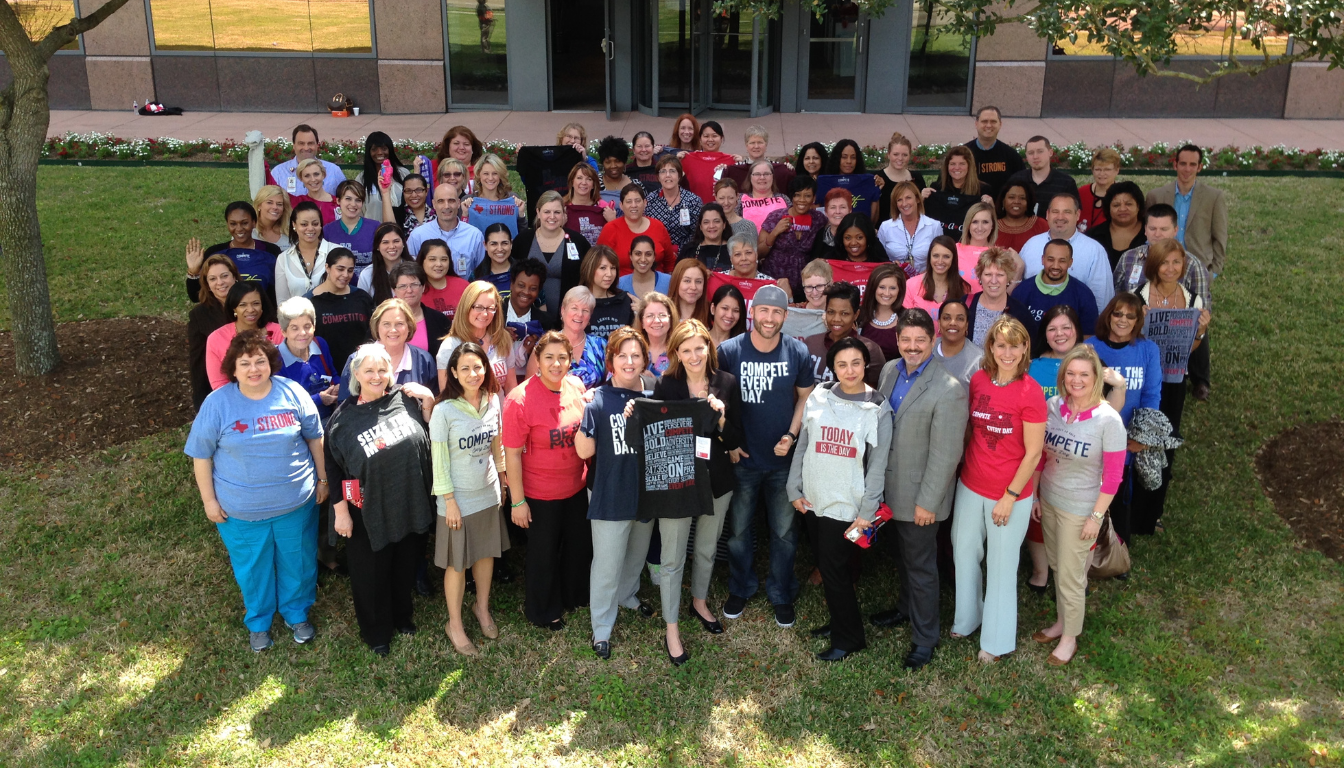
I flew to Houston convinced I was ready.
The organization wanted me to speak at their annual HR event - my first corporate keynote. "Just tell us your story," they said. So I wrote down what I wanted to say, read through it on the flight, and told myself that was enough.
It wasn't.
I nervously rambled. I paced the stage like a caged animal. And I was anything but clutch in that moment.
The only reason that story has a happy ending is because they graciously invited me back years later (after I'd learned what preparation actually means).
Most people think pressure builds character. That high-stakes moments forge champions. They don't.
Pressure doesn't build anything. It reveals everything you've already built - or failed to build - in the moments leading up to it.
The Difference Between Choking and Clutch
Think about the clutch performers you admire. Michael Jordan. Peyton Manning. Serena Williams. That leader on your team who always delivers when it matters most.
We assume they're wired differently. That they have some genetic advantage that lets them perform under pressure while the rest of us fold.
But here's what the data shows: Michael Jordan missed 26 game-winning shots. Kobe Bryant missed 72% of his game-tying or winning shots.
These are arguably two of the most clutch players in NBA history - and they missed more pressure shots than they made.
So what makes them clutch?
It's not some mystical ability to perform under pressure. It's their choice to prepare like pressure is coming, even when they don't know when it will arrive.
The difference between excitement and nervousness is your level of preparation.
When I finally worked with a speaking coach who understood performance, he asked me a simple question: "Would you ever go into a game without watching film, studying the playbook, and practicing plays?"
Of course not.
"Then why are you stepping on stages without rehearsing your content relentlessly?"
That question changed everything. Professionals don't wing it.
Why Most People Panic When Pressure Hits
If you haven't put in the work leading up to a high-stakes moment - if you haven't visualized every scenario, if you haven't practiced repeatedly - your focus will be on everything you can't control.
The size of the moment. The stakes. The people watching. The consequences of failure. Your mind races through disaster scenarios. Your body tenses up. And your performance crumbles under the weight of all that noise.
But if you've prepared like a Competitor - if you've rehearsed until failure becomes nearly impossible - your focus narrows to the one thing that matters: executing what you've already done a hundred times.
There's no nervousness. Just excitement for an opportunity you've been preparing for.
I started treating my keynotes like an athlete practices plays. I rehearsed stories until I could tell them in my sleep. I visualized every possible question, every technical failure, every audience reaction. I practiced stage movements until they became second nature.
The presentations didn't get easier. The stakes didn't get lower. The pressure didn't disappear.
But I stopped being nervous. Because I'd already lived through every version of that moment in my preparation.
The Over-Preparation Strategy Elite Performers Use
You don't practice until you get it right. You practice until you can't get it wrong.
Peyton Manning would spend hours watching film after his teammates went to sleep. He knew the exact yard line where every receiver's right foot needed to touch. He studied every defensive tendency until he could anticipate scenarios nobody else saw coming.
That's not obsession. That's competition against yourself, choosing to be more prepared than you were yesterday.
The framework that guides this approach is what I call C.O.M.P.E.T.E., and three specific elements apply directly to preparation:
Clarify what game you're actually playing. Most people practice the wrong things. They prepare for what they hope will happen instead of what could happen. Before your next high-stakes moment, ask: What's the worst-case scenario? What if my tech fails? What if someone challenges my credibility? What if I blank on my key point? Prepare for those realities.
Own the preparation, not just the performance. You can't control whether you win the deal, nail the presentation, or get the promotion. But you can control how ready you are when the moment arrives. Stop hoping you'll wing it. Start owning your preparation like your future depends on it.
Pressure-test your preparation. Run through your pitch with a skeptical friend. Practice your presentation in the actual room if possible. Simulate the pressure conditions before they're real. The more you rehearse under realistic pressure, the less intimidating the actual moment becomes.
How to Transform Nervous Energy Into Competitive Fuel
Pressure isn't your enemy. It's feedback.
When you feel that nervous energy before a big moment, it's your body telling you something important: this matters. That's not a weakness—it's competitive fuel waiting to be channeled.
The question is: did you do the work that transforms nervousness into excitement? If you're under-prepared, that nervous energy becomes anxiety. It spirals into worst-case scenarios and self-doubt. But if you over-prepared, that same energy becomes anticipation. It sharpens your focus and heightens your awareness.
Same pressure. Different preparation. Completely different outcome.
I still feel the weight of big moments. The stakes still matter. My heart still races before important keynotes.
But now? I recognize that feeling as excitement for an opportunity I've already lived through a hundred times in rehearsal.
The Real Cost of Winging It
Looking back at that Houston keynote, I know exactly why I failed. It wasn't the pressure. It wasn't the stakes. It wasn't even my lack of experience.
It was my choice to show up unprepared and hope I could figure it out in the moment. I thought winging it was confidence. It wasn't. It was arrogance disguised as spontaneity.
Real confidence comes from knowing you've done everything possible to prepare for what's coming. It's the quiet certainty that no matter what happens, you've already lived through every version of this moment in your preparation. Your talent doesn't make you clutch. Your choice to outwork it does.
So ask yourself: What high-stakes moment is coming for you?
That presentation. That difficult conversation. That career-defining opportunity. And then ask the harder question: Are you preparing for it like a spectator or a Competitor?
Because when that moment arrives - and it will arrive - pressure won't build your character. It will reveal exactly what you've already built.
Jake Thompson is a keynote speaker on competitive mindset who works with sales-led organizations, construction teams, and associations to build high-performance cultures that compete every day through the C.O.M.P.E.T.E. Framework®, inspiring keynote programs, and practical systems that turn inconsistent results into sustained excellence.