In November 2019, I posted a picture of myself with a kettlebell and a caption that started with "I can't believe I did this."
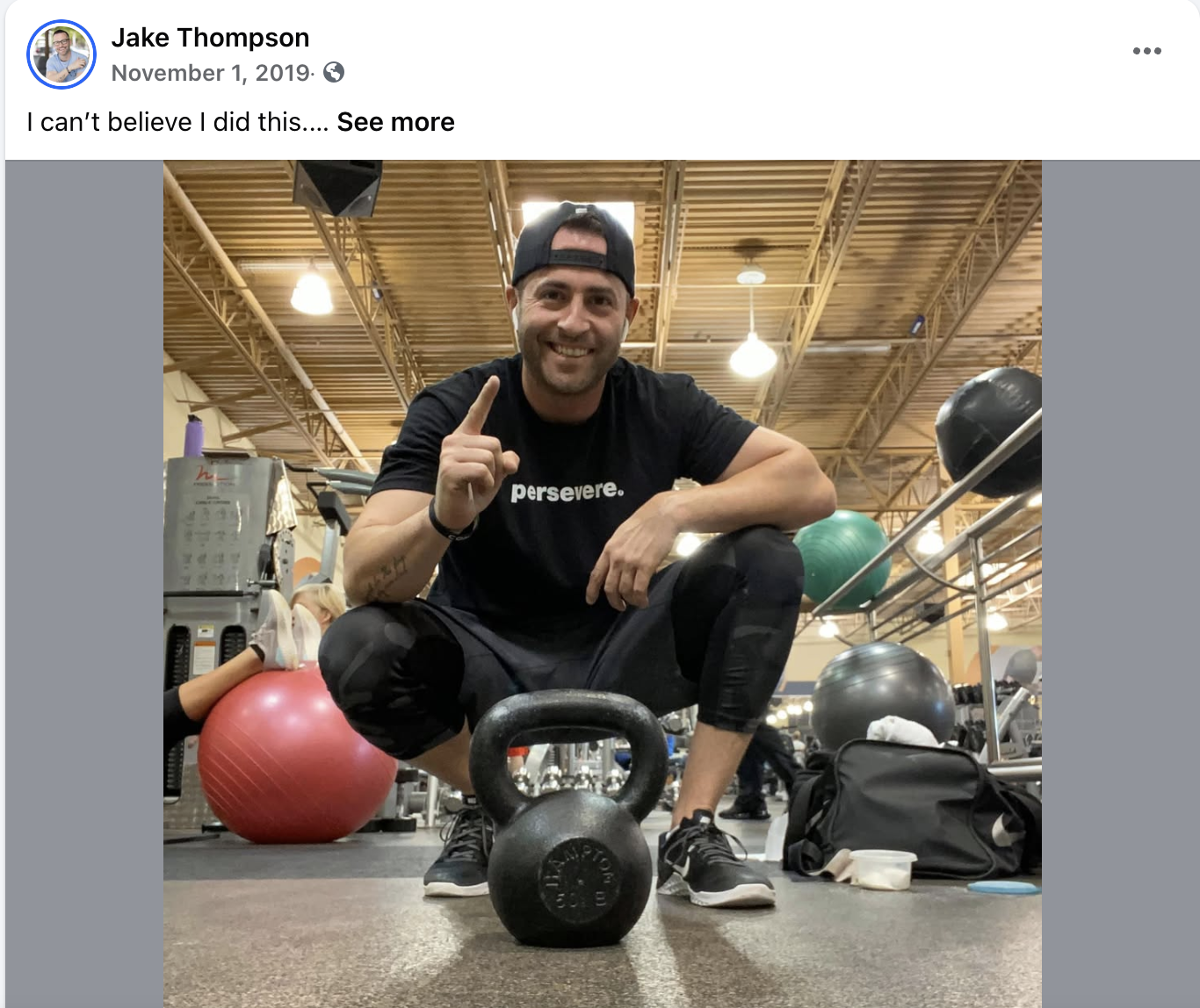
It was day one of a challenge to swing a kettlebell 10,000 times before December 1. That works out to 334 swings a day for 30 straight days.
I'd spent that whole year doing a different hard thing every month. There was a 500-burpee workout, a 1,000 push-up challenge, and a month of squats I called Squatober. My friend Laura Gassner Otting is the one who nudged me into the swing challenge, but she wasn't the real reason I said yes.
The real reason was fear. I was planning a big change in my business for 2020, the kind that would shift the focus I'd had for the previous eight years. I couldn't see all the steps. I was dealing with imposter syndrome, and I'd thought through a best-case scenario and a lot of worst-case ones.
I knew that change was going to test me. I wanted my mindset stronger before it did.
I've done the 10,000 swing challenge almost every November since. I'm over halfway into this year's as I write this, and it's taught me more about mental toughness than any book I've read on the subject.
You can't snap your fingers and be mentally tough
In that first post in 2019, I wrote, "We can't snap our fingers and suddenly have the mental fortitude we desire. We build it by embracing discomfort, getting out of our comfort zone, and betting on ourselves."
I believe that more today than I did then.
It's easy to treat mental toughness like a reserve that shows up when we need it. A big deal falls apart, a key employee quits, the market turns, or a health scare hits the family, and we expect toughness to be waiting for us.
It doesn't work that way. Mental toughness behaves a lot more like a muscle than a personality trait. It grows when you put load on it over and over, and it shrinks when you stop.
Researchers have been finding versions of this for decades. In a 2007 study, psychologist Angela Duckworth and her colleagues found that grit, defined as passion and perseverance for long-term goals, predicted which cadets made it through West Point's brutal first summer better than the academy's own measures of talent and fitness. Psychologist Albert Bandura's work on self-efficacy points the same direction. The strongest source of belief in yourself is mastery experience, meaning small wins you earned through your own effort.
That's the part people skip. Confidence and toughness are both built from reps you already completed, and you can only complete reps before the moment you need them.
The hard season is the wrong time to start training
Think about any athlete you admire. Nobody starts conditioning the week of the championship. The work that shows up in the fourth quarter got done in an empty gym months earlier, when nobody was watching and nothing was on the line.
Your career works the same way.
If you wait until the tough quarter to build discipline, you'll be trying to learn the skill and survive the situation at the same time. That's when you fall back on whatever habits they already have. If those habits were built in a season of comfort, comfort is what you'll get.
I call that Comfort Drift. You go to what's most comfortable instead of what's best, and our brains love comfort. It's a slow slide that never announces itself, and you usually don't notice it until the hard season shows up and asks for something you never built.
The swing challenge is my way of building in advance. It's a hard, measurable, daily standard I choose on purpose, in a month when nothing is forcing me to.
The tough days build toughness, and so do the easy ones
This year has given me plenty of reasons to skip.
My knee still isn't where I want it after surgery. My right bicep and shoulder have been giving me trouble too. I can't run, and a lot of upper body work is off the table right now. That's a long list of excuses, and lately I've been tempted to use every one of them.
So when November came around, I didn't ask whether I felt like it. I asked what I could still do. A kettlebell swing is hard and it's a lot of reps, and it's something I can do.
The travel days are tough too. This month I'm speaking at the Field of Dreams in Iowa, in Wichita, in Cedar Falls and in Phoenix. That means fitting swings in around flights, drives and hotel gyms. On those days the excuse is right in front of you, so at least you know exactly what you're fighting.
The easy days are sneakier. I'm home, nothing is in the way, and a voice in my head says I'm ahead of pace, so I can take it light today. Nobody would know if I did 300 instead of 500.
I would.
The tough days add load because everything is telling you to quit. The easy days add load because nothing is making you keep your standard except you. Both count. I'd argue the easy days count more, because that's where drift does its best work. It rarely shows up as a big decision to quit. It shows up as one small "that's good enough" on a day when nothing was hard.
Plan for the bad days before they happen
Ten thousand swings in 30 days is 334 a day. I don't plan for 334. I plan for 500.
Somewhere this month there will be a delayed flight, a canceled connection, or a drive I didn't plan on, and the swings I wanted that day won't happen. A plan that only works when everything goes right falls apart by the first bad Tuesday. The extra 166 swings a day are the buffer that covers the days the travel wins.
That's the same advice I give the leaders I work with about their calendars. If your priorities only get time when the week goes perfectly, they'll get time about twice a year. Block more time than you think the priority needs, and protect the extra like you'd protect a meeting with your best client.
Doing hard things builds the muscle. Deciding ahead of time what you'll do when the hard thing collides with real life is what keeps you from losing it.
What this means if you lead a team
I spend most of my year on stages with sales teams, construction leaders and business owners. The question I hear most often is some version of this: how do I keep my people performing when things get hard?
My answer is usually to watch the good weeks as closely as the bad ones.
Your people tend to rise when the pressure is on. The standard slips in the stretch after a win, when the pipeline is full, the quarter looks safe, and everyone feels comfortable. That's Victory Drift, and it's the most expensive kind because it feels like success while it's happening.
The next tough quarter, the next reorg, or the next client you could lose is going to ask something of your team. Whatever they built in the calm months is what they'll have to work with. A few ways to build it now:
Keep one daily standard that doesn't loosen when results are good.
Track the inputs, like calls made, conversations held and follow-ups sent, alongside the outcomes.
Coach the person who's doing fine before they stop being fine.
Talk openly about what the team will do when the hard season shows up, before it does.
Start your own reps this week
You don't need a kettlebell to do this. You need one hard thing you can do every day that nobody is requiring of you.
It could be a fitness challenge. It could be five outbound conversations a day, 500 words a day toward the book you keep talking about, or one hard conversation a week you'd normally put off. The point is that it's measurable, it's a little uncomfortable, and you choose it on a day when you don't have to.
Pick it today. Decide what you'll do on the bad days before they show up. Then keep the standard on the easy days, when nobody would know if you let it slide.
You're building the version of you that the hard season is going to need.
One day at a time, one swing at a time. Go compete.
Jake Thompson, CSP, is a keynote speaker and the founder of Compete Every Day. He helps sales teams and leaders fight complacency and drift so they can compete every day. If you're planning a 2027 kickoff, leadership retreat or conference and want your people to build mental toughness before they need it, learn more about bringing Jake to your event.