

HOW TO HIRE A KEYNOTE SPEAKER: A MEETING PLANNER’S GUIDE
Straight answers to the questions meeting planners actually ask — from a speaker who's delivered 600+ keynotes and been on the planner's side of the table.
Hiring a keynote speaker is one of the highest-visibility decisions a meeting planner makes. The right speaker makes the whole event. The wrong one makes 45 minutes feel like 90.
This guide answers the questions you're actually asking - how to evaluate speakers, what to budget, how far in advance to book, what to put in a brief, and how to tell the difference between a speaker who'll do the work and one who'll phone it in. I've delivered 600+ keynotes over the last 15 years. 74% of my bookings come from repeat clients or audience members who saw me speak and brought me back, which means I've watched hundreds of planners navigate this exact process. Here's what I've learned.

when and what to budget

-
For an in-demand speaker, 6-12 months in advance is standard. 9+ months for premium dates - Q1 (sales kickoff season) and Q4 (year-end leadership summits) book out first. Last-minute availability (under 90 days) is possible but limits your options. If you have a hard date, reach out even if it feels early; speakers hold room for the right fit.
-
Professional keynote speaker fees generally fall in four tiers. Emerging speakers: $5,000-$10,000. Established speakers with a proven track record: $12,000-$20,000. Credentialed speakers with major platforms (books, podcasts, CSP® designation): $20,000-$40,000. Top-tier celebrity or bestselling-author speakers: $50,000+. Travel and AV are typically separate line items. The right tier depends on audience size, event stakes, and the outcome you need - a 50-person leadership offsite and a 2,000-person national sales kickoff aren't the same conversation.
-
The honest answer: it depends on how you measure. A speaker who delivers inspiration but no follow-through gives you a 45-minute spike and nothing after. A speaker who delivers frameworks your team actually uses creates lasting change - which pays back the fee many times over through sales performance, retention, and culture. When evaluating ROI, look at what your team will be doing differently 30, 60, and 90 days after the event. The right speaker should make that question easy to answer.


-
Six questions separate serious speakers from the rest:
How do you customize the talk for our audience and theme?
Can I see a full-length recording, not just a highlight reel?
What does the pre-event process look like — how much do you need from us?
What do my attendees walk away with that they can use Monday morning?
What's your approach to Q&A, meet-and-greets, and off-stage engagement at the event?
What do your repeat clients say — and can I talk to one? A speaker who can't answer all six crisply is a speaker who hasn't done the work.
-
Three signals matter more than social media followers: full-length video of a recent keynote (not a 90-second sizzle reel), direct references from meeting planners who've hired them more than once, and the repeat-booking rate. A speaker who's booked once is a question mark. A speaker whose clients bring them back year after year has proven the content holds up. Ask any speaker what percentage of their bookings come from repeat clients. If they don't know the number, that tells you something.
-
A motivational speaker delivers energy — the goal is to leave the room fired up. A keynote speaker delivers a message built around a specific outcome: a mindset shift, a framework, a decision your team needs to make. Motivation fades in about 72 hours. The right keynote gives your team something they're still applying three months later. For most corporate events — sales kickoffs, leadership summits, all-hands meetings — what you actually want is a keynote speaker. Pure motivation is what you rent when the content isn't doing the work.

What to Ask Before You Book

-
![Raving review for sales keynote speaker.]()
"He's not a 'one and done' speaker"
– he's a true partner who wants to see your team grow and win.
Karl
Highstreet Insurance -
![Raving review for sales keynote speaker.]()
"Jake was a great partner from start to finish."
He took the time to understand our business and worked closely with our team to tailor both his keynote and breakout sessions so the content was relevant, engaging, and immediately actionable. His message around daily improvement, ownership, and accountability truly resonated with our sellers and leaders, and the impact continued well after he left the stage.
Natalie
Wyndham Global Sales -
![Raving review for sales keynote speaker.]()
"Jake is fantastic to work with!"
He led 2 sessions at our national meeting & they were the best attended & highest rated of 12 offerings for over 1200 attendees. Jake is the consummate professional. His preparation and attention to detail are clearly hallmarks of his and his focus on our goals came through in all he did. Our team was incredibly impressed with his seemingly innate ability to listen & learn to create & customize presentations that spoke to our organization.”
Scott
Genentech


How the Process Actually Works
-
Customization sits on a spectrum. At the low end: your company name in the opening slide, maybe a reference to your industry. At the high end: a discovery call with your leadership, custom framing built around your specific challenge, audience-specific examples, and tie-ins to your event theme. A professional speaker should do the full version by default. If a speaker tells you their stock talk is ‘already perfect for any audience,’ that's a red flag — it means they're not willing to do the pre-event work that makes a keynote actually land.
-
The sweet spot for most corporate events is 60-75 minutes, with 15-30 minutes for Q&A. Under 45 minutes isn't enough time for a speaker to build an argument and give your audience real takeaways. Over 100 minutes without a break is a stamina test, not a keynote. For multi-day events, pair a 60-minute opening keynote with a 90-minute workshop the next day — the second session is where the content actually gets applied.
-
In-person wins when audience energy matters — sales kickoffs, culture resets, leadership offsites. Virtual works for budget-constrained events, globally distributed teams, and shorter formats (30-45 minutes). The quality gap between in-person and virtual has nothing to do with the format and everything to do with the speaker's setup. Ask a virtual speaker about their studio: lighting, audio, backdrop, and whether they use interactive tools or just talk at a screen. The answer tells you whether you're getting a keynote or a glorified webinar.
-
Four things, minimum:
The event's primary goal — what change you want in your audience by the end of the day.
Audience makeup — roles, tenure, what they're currently struggling with.
The emotional starting point — are they coming in energized, burned out, skeptical, celebrating?
What's happened in the company recently that will be top-of-mind — a reorg, a record year, a tough quarter, a leadership change.
The better the brief, the sharper the keynote. Great speakers will ask for all of this unprompted; the best ones will ask for more.


What Happens After the Keynote
-
A real speaker's job doesn't end at the last slide. Standard post-event deliverables should include: a resource packet or implementation guide your attendees can reference, access to the speaker for follow-up questions in the weeks after the event, and (for high-stakes engagements) a strategic plan that helps your leadership turn the keynote into lasting change.
I give every client a customized 60-day post-event plan — because the goal was never the keynote. The goal was the change that comes after it.
-
Three measurement windows: 48 hours (did attendees talk about it unprompted the next day?), 30 days (are leaders using the frameworks or language from the keynote in team meetings?), and 90 days (has team behavior changed in a measurable way — pipeline velocity, engagement scores, retention, kickoff follow-through?).
Immediate satisfaction surveys measure entertainment. The 30- and 90-day windows measure impact. If a speaker won't commit to follow-up measurement, they're selling you entertainment.
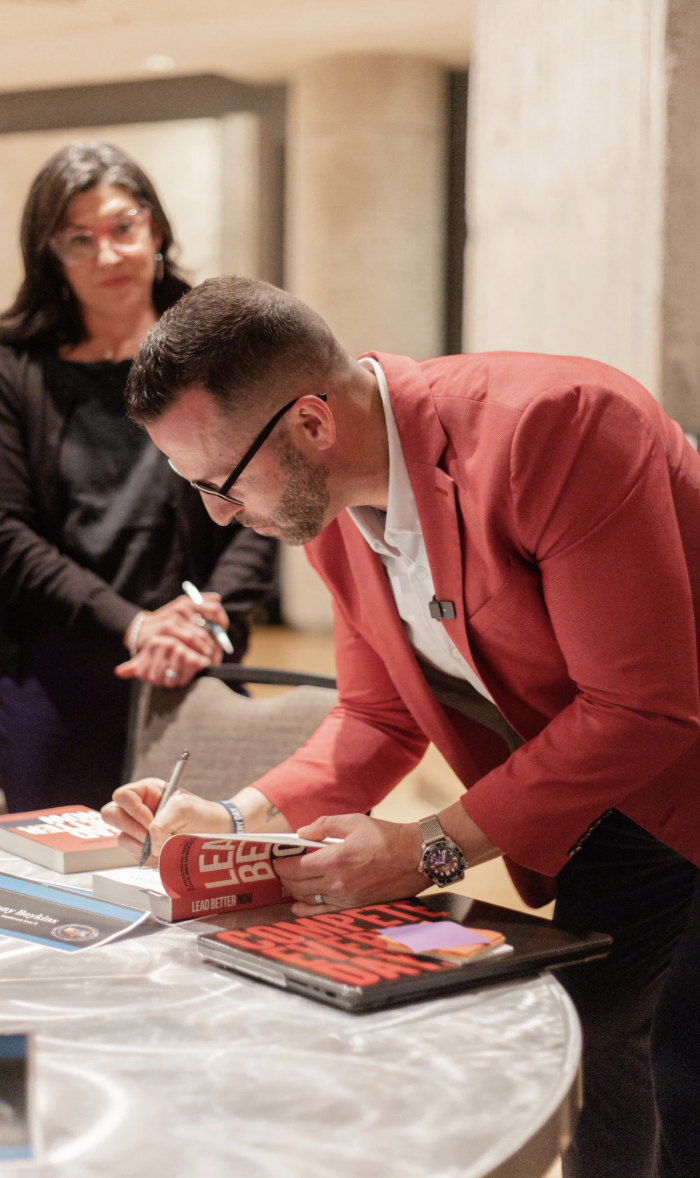





Book a Keynote That Drives Behavior Change, Not Just Inspiration
The first conversation is just discovery - no pitch.
If you're sourcing a keynote speaker for a sales kickoff, leadership summit, construction all-hands, or manager development program, I'd love to learn about your event. Tell me what you're trying to accomplish, who your audience is, and what outcome you need by the end of the day. I'll respond within 24 hours.